 |
||
|
|
|
|
|
||

Director's Notes. . . |
|
|
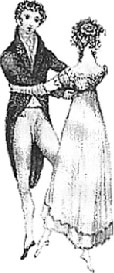
"The unpredictable and the predetermined unfold together to make everything the way it is," says Valentine in Scene Four of Arcadia. This is the main thought behind the play, I believe. Arcadia is a study of the conflict between reason and romance, set on the edge of the Enlightenment and the Romantic Eras. In the play, the wild, dark emotional artwork of Salvator Rosa and Fuseli is pitted against the precise, classical paintings of Claude Lorraine. Thomasina translates classical Latin in her tutorial, while she revels in the poetry of Lord Byron, "the most poetical and pathetic and bravest hero." We all like life to make sense. Much of the time it does. We feel safe assuming from experience that the sun will rise on another day tomorrow. We will wake up to its warmth and go about our daily routine. We can expect to eat our meals with our usual regularity, see our colleagues at work, and go to bed at the end of the day with a certain amount of predictability. But this predictable
routine does not always happen. The unexpected seems to take place just
as often, if not more often, than the expected. You wake up late and
miss the carpool to work. Your step brother has a motorcycle accident
on Thanksgiving. (That's not supposed to happen). The United States
presidency is undecided. (Who would have supposed?) The unpredictable nature of life makes it frustrating, disappointing, exciting, and wonderful. A nineteenth-century school girl in the English countryside can formulate the mathematics that will be "invented" in the twentieth century. Hannah the rationalist can learn to trust her gut instincts. The quest for answers is what is important. Striving to solve the mystery is the meat of existence. Stoppard shows us our world as a timeless miracle where the past and the present meet and waltz side by side in the face of the knowledge that our earth is doomed to cool into darkness. | |
|
. . . Carolee Shoemaker |
|
 Unlikely romances spring up, and throw the whole predictable universe
out of whack. "The universe is deterministic all right, just like
Newton said, I mean it's trying to be, but the only thing wrong is people
fancying people who aren't supposed to be in that part of the plan,"
Chloe says in Scene Seven. "Ah. The attraction that Newton left
out," replies Valentine.
Unlikely romances spring up, and throw the whole predictable universe
out of whack. "The universe is deterministic all right, just like
Newton said, I mean it's trying to be, but the only thing wrong is people
fancying people who aren't supposed to be in that part of the plan,"
Chloe says in Scene Seven. "Ah. The attraction that Newton left
out," replies Valentine.